concerted chaos
  • blog.
  • about.
  • workshops.
follow.

Word to Guide Me: #youredustory, Week 1

1/5/2015

4 Comments

 
Picture
Full. 

That's the word that immediately occurs to me as I think about my classes this past semester, and as I think about the ones to come in the Spring. My reflex meant that response in a tongue-in-cheek way, as in, "Wow, there certainly are a lot of kids in these classes!" And to be sure, there are quite a few--over 200 in six classes, three different preps.

But the more I thought about it, the more I realized I want my students' experiences in our time together to be marked by a different kind of fullness, one beyond just "lots of physical bodies stuffed in one small space." 

I want their experience in B109 to be full of laughter. I want their time to be full of creation. I want their chunks of life in here to be full of part hard work and part giggles, part passion and the building up of patience, and frustrations resolved by "oh holy crap, now I see!" moments.

I want full classes, brimming with not just people, but ideas and surprises. I want them to tumble out the door still debating, and I want them to fill the Internet with their words. And I want to step back and let the fullness of what they've created change their worlds for good, forever. 

4 Comments

Where We've Been + Where We're Going

12/7/2014

0 Comments

 
It's been a very hectic semester. I have 3 different preps and 100 students with ability levels ranging from "valedictorian" to "struggles with reading." I did want to take a moment, however, and share some of their work with you. I'm going to append most of it without comment, and let you kind of cruise it as a gallery walk. 

Here are the blogs from my AP English Language class. No, they did not pick the thumbnails. Their general assignment is to pick something we've done/mentioned in class and connect it to something outside of class in the "real world." (h/t to David Theriault, whose idea this was.)
Create your own Playlist on LessonPaths!


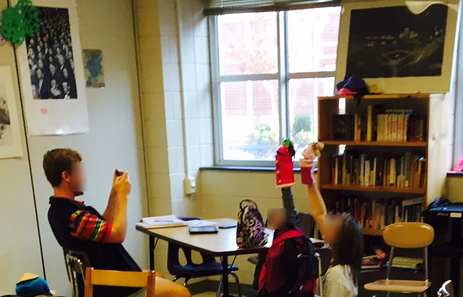
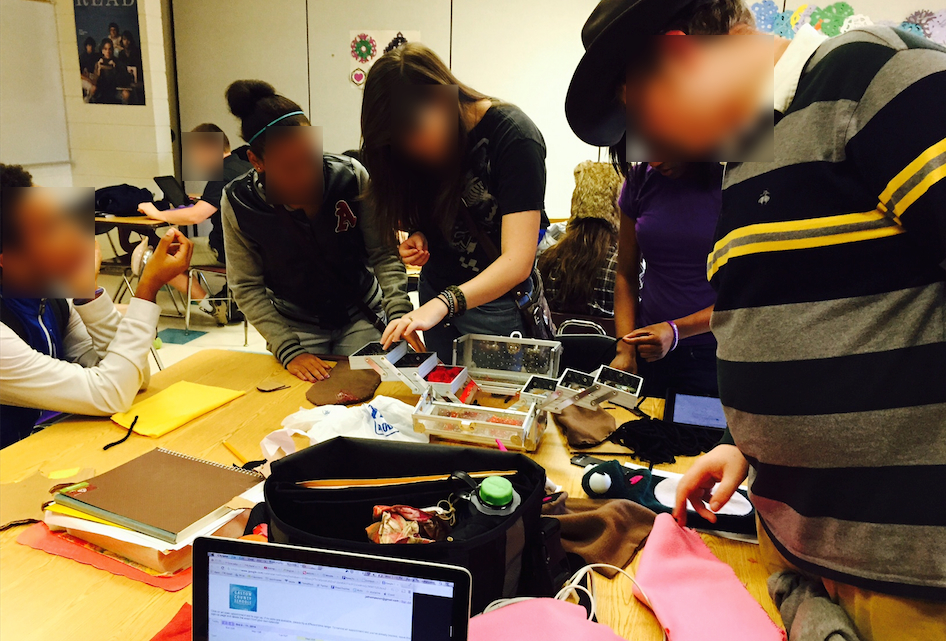
Students made grammar videos and video Sparknotes (with the puppets they also made):

They used Google Draw to create symbolic renditions of the patterns they found in Virginia Woolf's The Waves:
Picture
Picture

The AP students have also started to make YouTube videos that explain important literary vocabulary.

And the Desktop Publishing kids have been making massive portfolios of work: building websites/blogs; photoshopping images; coding games with Tynker; making elegant and terrible slide decks and walkthroughs of complicated technological processes; and all sorts of other foolish and beautiful stuff. I will create a separate post that links them all in at the end of the semester when they are finally done. 
0 Comments

Self-Preservation, Mob Mentality, and #ferguson

11/25/2014

0 Comments

 
I planned today's AP lesson before the grand jury in the Michael Brown case handed down the decision to not indict. However, the decision sadly and precisely mirrored what I wanted them to talk about. 

I started class by reading to the students, again, the closing of James Baldwin's magnificent essay, "Notes of a Native Son." In part, the essay narrates Baldwin's experience of his father's death, set against the backdrop of a race riot in Harlem. He writes: 
It began to seem that one would have to hold in the mind forever two ideas which seemed to be in opposition. The first idea was acceptance, the acceptance, totally without rancor, of life as it is, and men as they are: in the light of this idea, it goes without saying that injustice is a commonplace. But this did not mean that one could be complacent, for the second idea was of equal power: that one must never, in one’s own life, accept these injustices as commonplace but must fight them with all one’s strength.
Then I gave them their Over-Thanksgiving work: read the chapter in Blink by Malcolm Gladwell which details the Diallo (41 shots) case. But the bulk of the class centered on a big, full-circle conversation around these two questions:
  • What level of blame should we assign the individuals who see evil happening, but do nothing? Are they in any way responsible for the evil itself?
  • How much blame should individual members of a mob bear for the actions of the group?


And we talked through and teased out nuance. 

For over an hour. 

We returned again and again to the big-picture tension--is our higher responsibility to our moral/ethical beliefs, or is our higher responsibility to self-preservation? The general consensus? That the higher responsibility should be to our own ethical standard, but when it came down to it, most people preserve themselves first. We applied this to Of Mice and Men, The Crucible, bullying situations, and even the Biblical story of the disciples denying Christ before the Crucifixion. In all of those texts/situations, the individuals knew (either during or immediately afterwards) that they should have said something to the persecutors, even if it meant their own deaths as well. But most people would have done exactly what the stories say: they (and likely I) would ignore our ethical precepts in honor of saving our own lives. 

This sets up one of our final units of the semester, for when we come back from Thanksgiving: How Do We Respond To Injustice (even if we don't think we can do anything about it)? 

I look forward to these conversations, especially as we weave The Things They Carried into it, and begin to discuss how the baggage we carry with us affects how we choose to interact with the world. 
0 Comments

Thoughts on Arguments + Thoughts on Tangents

11/19/2014

1 Comment

 
In the mornings, I teach AP English Language, which is fundamentally a class about argumentation. We learn about the rhetorical triangle, using good evidence, finding patterns in the arguments of others, analysis, and a bevy of other things. Today's lesson was to watch Hank Green's short video on the mass incarceration of many American citizens and figure out his argument (and the warrants underlying it). Then we were going to talk about what we can infer about the speaker by the argument he makes. 

Then we were going to do something completely different, but we never really got there. The conversation about the video turned into a full-on debate about the efficacy of the prison system and whether convicted felons should get second chances to be able to get jobs and support themselves/their families. We also connected the video to the one we watched yesterday, which talked (in part) about the development of the prefrontal cortex in teenagers and how that affects impulse control until people are 25 years old. 

The argument was good, for sure. I would even call it tense and electric--the best kind of debate. And when I plan these things more thoroughly, I put structures in place to require almost everyone to participate. However, days like this are all too rare, when kids latch onto something and want to talk and talk about it, and sometimes in my zeal to plan and stay the course, I have all-too-often steered the tangents and conversations back to REAL ACADEMIC WORK and not allowed space for thoughts to develop and unfurl and ramble a little bit.

It was awesome. 

And it was a little bit of a reminder to practice what I preach- that learning is messy, it takes awhile, and it doesn't necessarily happen on a regimented schedule, at least not all the time. 
1 Comment

The Revision Quandary: All The Time Is All For Me

11/18/2014

0 Comments

 
This is going to be a quick post, but it's something that hit me as I was walking out of a meeting, and I have learned that I need to write them down before I forget. 

I was having a conversation with Kyle Wood (a 5th grade teacher who is awesome, and you need to check his stuff out), about video making. My kids have tried to do all iterations of videos: with puppets and without; making video SparkNotes of chapters in Of Mice and Men and videos about How To Fix Your Terrible Grammar. And they are largely mediocre, if we're being perfectly honest. There are funny moments and instructive moments, but it has proven very difficult to be both entertaining and to communicate concrete concepts. For example, they have grammar videos that teach the concept well, but are kind of dry and dull; they also have videos that are entertaining, but at the same time, people watch their videos, laugh, and don't learn the concept they were supposed to learn. The lede is buried. 


There are so many "non-academic" skills they need to be successful in this type of video production. They need to be able to shoot clear videos and edit them. They need to be competent puppeteers. They need to be able to write engaging scripts that communicate personalities. 


Oh, and they need to understand their content well enough to communicate it to others. Which, in many cases, forces them to step up their research skills as well. 


The issue is this: how much time do we need to spend allowing them to revise their original videos? How well do the videos need to be revised before they are made available to a public audience? Is the process the point, even if the videos don't all succeed in doing what they claim to do? 


And how much time do we need to spend giving them space to learn video editing skills, etc? Or is this a try/fail/do it again, but with a different project? Maybe it's better to just get on to the next project. 


I am struggling with this (and finding time for ALL OF THE THINGS). If you have any ideas, please share on Twitter or in the comments. 
0 Comments

A Week for Reflection, Day 3

10/30/2014

0 Comments

 
Wherein, we argue about collaboration and we look at all those chickens. 

So, in case you haven't noticed, I'm running a day behind in writing/posting these. I may catch up this evening; maybe not. Turns out that actual teaching gets in the way of writing about teaching. :-)

Anyway:

Day 3, 10/29/14

1st period, AP English Language
We began class with the vlogbrothers' video "I Kind of Hate Batman." As I mentioned before, I recognized on Tuesday that students were having a lot of difficulty with understanding speaker (as it pertained to the rhetorical triangle) and finding the nuance in a speaker's argument. Unfortunately, it's really hard to analyze how speaker/purpose/audience affect argument until you kind of have a good grasp on what the argument is. Often, my process for figuring out the argument + rhetorical triangle is (ironically) circular: first, I speculate on what the argument is; then I cycle through speaker/purpose/audience; and finally, I modify my initial argumentative claim based on the evidence I discovered via the triangle. 

Read More
0 Comments

A Week For Reflection, Day 2

10/29/2014

1 Comment

 
Picture
This week, I'm writing about what we did in every class period, every day, in the hopes that it'll help jar some ideas loose for both me and readers of this blog, and so you can see what a real day in the life of my students and me looks like. 

Day 2, 10/28/14

1st period, AP English Language
I talked yesterday about all of the projects we were in the middle of-- today, we took some steps towards completion for some of them. First, we watched my bleeped version of Ze Frank's "Make Believe" video (NSFW in its unedited form) and discussed the argument he was making, as well as what we could tell about the speaker from the argument he made. Students struggled with the concept of "speaker"; they really wanted to describe his physical characteristics (he doesn't ever blink!) instead of making inferences about his personality and history based on the argument he makes. This is something we're going to revise for tomorrow-- the Rhetorical Triangle Lights haven't come on yet for most of them, and I need to try something different. 

After that, they started filming their Puppet Grammar videos (in which they/their puppets teach a grammatical concept in 90 seconds or less). Some students also took the opportunity to finish up the OMAM Puppet Video Sparknotes we've been working on.  A few examples of these to come later--they need work with the puppeting and video production elements, but for a first try at this kind of thing? Kinda excited.

2nd period, planning
During this period, I went out to our "data room," where we (as a faculty) keep track of the struggling/at-risk students by documenting their grades, absences, behaviors, etc. We color red, yellow, or green beside their names, and it gives admins a quick-glance look at how these kids are doing and with whom they need to immediately intervene. During this time, I checked on my students (probably 20 of them) who are on this list, and highlighted/made comments by their names. 

Then, Cheryl and I made sure all our stuff was ready for my afternoon/her morning classes. 

3rd period, Desktop Publishing
Nothing complex to report here- students began filming their brief "what it feels like to be a student during the day" videos. This may eventually turn into a longer-form documentary type thing, but that idea is still in its infancy. I also have a couple students who are html-coding a puppet website for Cheryl's students. They made proposals, won the design challenge, and are doing incredible work trying to put the site together. 

4th period, English 11
Students in this class worked primarily on academic vocabulary and etymology. We just started this, and the kids seem to be taking to it well. It helps them to have more concrete types of assignments; below is the actual writeup from Google Classroom.
We're going to start adding a few words to your vocabularies every couple days. Some of them, you probably already know or recognize. I want you to know them to the level that you're actually USING them in the things you write. There will be tests on them every two weeks. 

Watch the attached videos and take notes on paper (studies show that writing on paper helps you remember stuff). 
For each of the words, look up synonyms and antonyms + make note of them as well. 
Finally, there are QUESTIONS at the end of each video. Answer them on your notes page as well. 

The videos are at http://www.showme.com/sh/?h=l7bNGwy AND http://www.showme.com/sh/?h=6pgHVom

Take a picture of your page of notes and upload the photo as your TURN IN for this assignment.
Then, they got the opportunity to stand outside for a fire drill for 20 minutes. Perfect ending to the day, really. 
1 Comment

A Week For Reflection, Day 1

10/27/2014

0 Comments

 
There has been a lot said in the past couple weeks about Grant Wiggins's blog post (actually, his daughter's), which offered narration and reflection about what a typical high school kid's day looks and feels like. I had not read this post before this morning, though, as a member of the connected educator community, I was aware of its existence. More on this in a minute. 

I guess since those ideas were in the ether, Cheryl and I decided to write a week's worth of daily reflection blog posts that outlined what the days were like from a teacher's perspective. Much like the aforementioned posts, we won't be concerning ourselves with all of the grading and other planning/homework we do outside of school (which is ample, for sure), but restricting ourselves to what happens between the first bell and the last. We hope you'll find this reflection useful. I know I will. 


So: Day 1. Monday, October 27. 

1st period - AP English Language (11th graders), 37 students
We're working with: the rhetorical triangle; video making, production, and analysis; pedantic grammar; blogging; communication/argumentation skills; patterning/finding arguments; puppets; and creating our own video SparkNotes for Of Mice And Men. We have a longer-term Blank White Page (genius hour) project hanging out on the back burner, and as you will see shortly, a new project impending. 

Read More
0 Comments

Using Word Clouds As a Patterning Exercise (And a Close Reading of The Declaration of Independence)

9/20/2014

0 Comments

 
One of the toughest tasks we face as teachers, especially teachers of English, is to show kids how to read complex texts, texts with words way, way above their pay grade. This is true in any subject, really--for example, have you ever actually tried to read the full text of the Declaration of Independence? Here's a taste, in case it has been awhile and you have forgotten: 
...to secure these rights, Governments are instituted among Men, deriving their just powers from the consent of the governed, --That whenever any Form of Government becomes destructive of these ends, it is the Right of the People to alter or to abolish it, and to institute new Government, laying its foundation on such principles and organizing its powers in such form, as to them shall seem most likely to effect their Safety and Happiness. Prudence, indeed, will dictate that Governments long established should not be changed for light and transient causes; and accordingly all experience hath shewn, that mankind are more disposed to suffer, while evils are sufferable, than to right themselves by abolishing the forms to which they are accustomed.
Yeah. Try reading that with a group of high school juniors at 2:30 on a Tuesday afternoon, and just see how attentive and excited they are about learning about our Founding Fathers. 

But what if I told you that there was a way to show students how to get at a main idea in a difficult text like the Declaration, and they only had to, say, understand maybe 1/8 of the words? 

Read More
0 Comments

Five Reasons to Use LessonPaths in Your Class

8/26/2014

2 Comments

 
One tool that we use in lots of different ways is LessonPaths (formerly MentorMob, now found at lessonpaths.com).  It allows you to create and organise content into playlists that go in a fixed order.  We have been using it for the last few years to archive all the work in a particular unit so students can easily find assignments they missed or need to revise.  This is the playlist from our first unit last year, and here is the one from Gatsby.

However, there are two WAY cooler functions that make it one of the most useful tools in our edtech toolbelt.

When you create a playlist, you can either make it privately or publicly editable.  We usually use the private setting for our course content, but we use the latter option a lot in Desktop Publishing.  I will create an empty playlist and is publicly editable and give students a bitly link to it so they can add work they have created around a common theme or topic.  We have done a publicly editable playlist to facilitate students’ sharing major projects with one another, as we did with The Crucible.  But there is an even better use with a more real-world audience.

We’re only a couple days into the school year, but I’m beginning the process of training the kids how to be tech trainers themselves, so they can help their own teachers when the teachers are struggling. So I’m having the students make walkthroughs--like, “here’s how you make a Google Form” or “Here’s how you make a slideshow that isn’t ugly.” I then have students load all of their individual walkthroughs on a playlist.

The benefits there are multiple. First, everyone can see everyone else’s work, which tends to increase the level of work right off the bat. Second, it allows me to say things like, “OK, friends, click through the steps on this list and tell me which one(s) are the most helpful.”  Most importantly, it lets me do what I just did this afternoon, which is send out a link to the Google Form walkthrough playlist to a dozen teachers at my school who wanted to learn how to use Forms. They can now actually test the walkthroughs--try to follow the directions, and then give feedback to students about where theirs fell short. And the more real-world audiences students can get, the better they get, and the faster they get there.

We also use LP to have students make playlists that function as portfolios of all their work for class. Every time they submit something to us digitally, we have them add the assignment to an individual playlist. That way, all of their assignments end up together, and it becomes really easy to track their growth over the course of a semester.

One more super useful function is that you can organise presentations in the order in which they present.  This is particularly helpful when you have lots of groups to present and not much time.  Having all the slide decks in a playlist makes it easy to move from group to group without too much down time.

Another big selling point for us is that you don’t need a separate login - you can use your google login.  That alone makes it better than an LMS, because trying to have students remember a bunch of different login information is difficult at best.

Are there any other ways you use LP in your classroom?  We would obviously love to steal them from you.

Note: this is a sister post to Cheryl's edtech post on ShowMe. 


2 Comments
<<Previous
Forward>>
    Picture

    The Writer

    I'm Andrew. I write about learning. I like to learn. 

    The Writings

    October 2016
    December 2015
    November 2015
    October 2015
    August 2015
    July 2015
    June 2015
    May 2015
    April 2015
    March 2015
    February 2015
    January 2015
    December 2014
    November 2014
    October 2014
    September 2014
    August 2014
    July 2014
    April 2014
    December 2013
    November 2013
    September 2013
    July 2013
    February 2013
    January 2013
    December 2012
    November 2012
    October 2012
    September 2012
    July 2012

    The #CFC

    Cheryl Morris
    Karl Lindgren-Streicher
    Crystal Kirch
    Carolyn Durley
    Brian Bennett
    Katie Regan/Shari Sloane
    Kate Baker
    Audrey Double Mac
    Sam Patterson
    Delia Bush
    Lindsay Cole

    RSS Feed

Powered by Create your own unique website with customizable templates.